

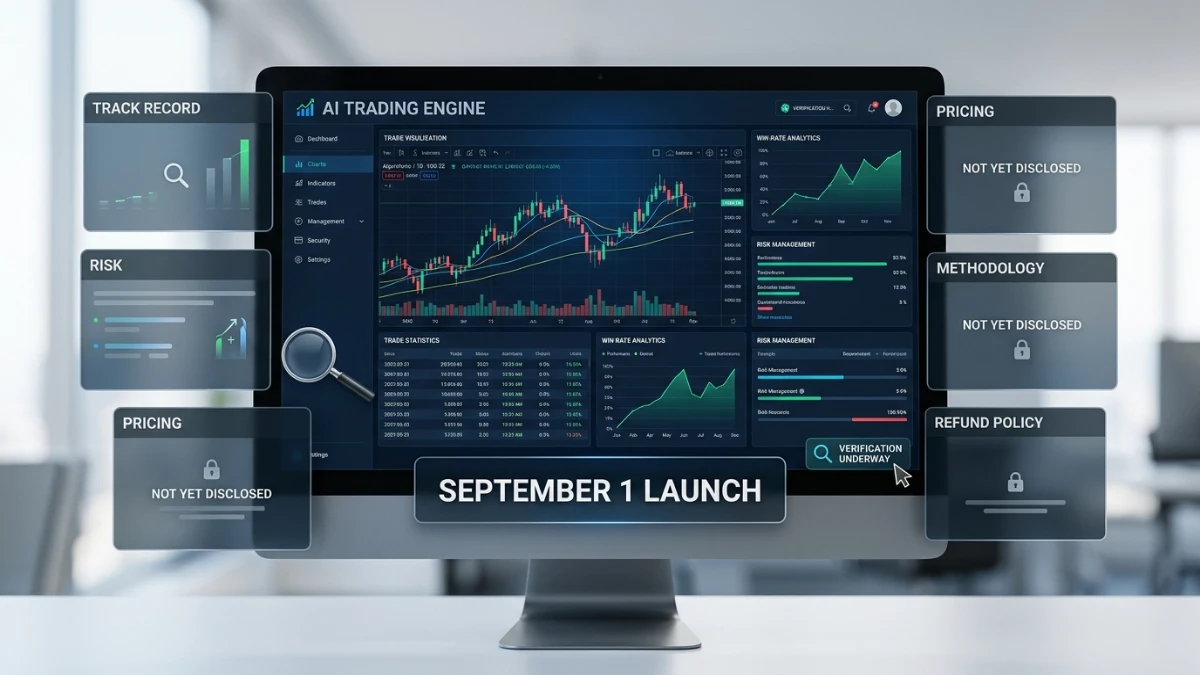
This is a pre-launch preview, not a hands-on review. The AI Trading Engine doesn’t open until September 1. Nobody outside the vendor’s team has used it yet. Below, we break down what the vendor claims, who’s behind it, and what to check before you join the waitlist.
Quick Summary
The AI Trading Engine is a new trading tool from Sean Donahoe, sold through ADD Marketing Group, LLC, and distributed via JVZoo. The pitch centers on one headline number: the vendor says it tested 20,551 trades, and 86% turned a profit. It opens Tuesday, September 1 at 10:00 AM Eastern. Early subscribers get a lower “early-bird” price. There’s no public pricing yet, no refund policy, and no platform detail. That’s typical for a launch built this way, but it’s worth knowing going in.
What’s Actually Being Claimed
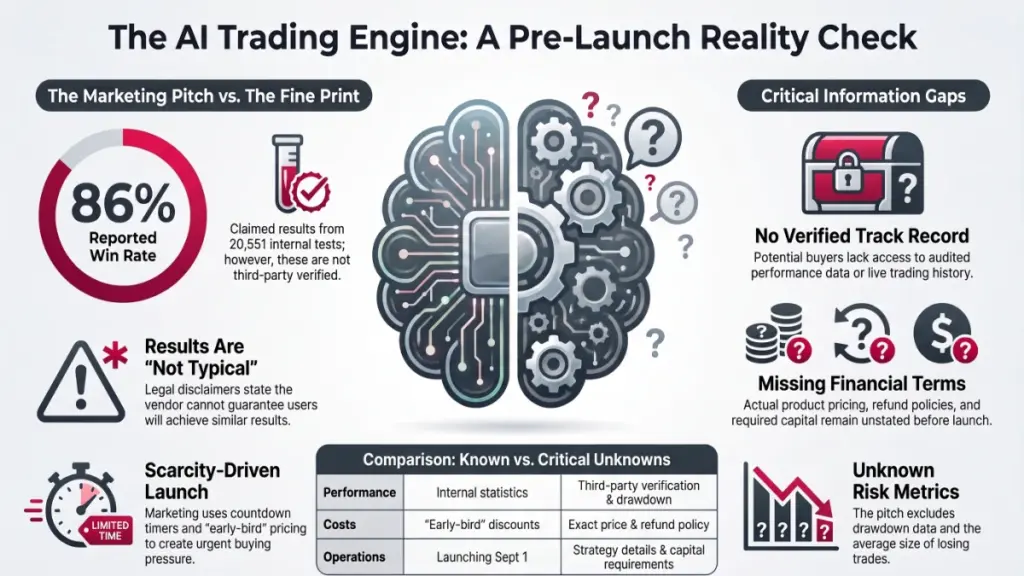
The landing page makes one core claim: the system ran through 20,551 trades, and 86% were profitable. That’s the entire pitch. The page doesn’t break down the testing period, the markets or instruments involved, average trade size, or drawdown. It also doesn’t define “profitable.” A trade that made one cent counts the same as a trade that made a thousand dollars, unless the vendor says otherwise.
The vendor’s own disclaimers matter here. The same page that promotes the 86% figure also calls these “OUR results and from years of testing” and states plainly that the results are “not typical.” ADD Marketing Group adds that it “can in NO way guarantee you will get similar results.” That’s standard legal language for this kind of offer. But read it literally: the vendor self-reported the 86% figure. No outside party audited or verified it. The same page promoting the number also disclaims it.
Who’s Behind It
Sean Donahoe gets credit for the product. ADD Marketing Group, LLC is the vendor. JVZoo handles the transaction as the retailer. JVZoo is a real, established platform for digital product sales. But its role stays limited to payment processing and marketplace hosting. JVZoo hasn’t reviewed, endorsed, or verified any claim made about this product.
We don’t yet have independent information about a track record specific to this system. If you want to vet Sean Donahoe or ADD Marketing Group before joining the list, do that research separately.
The Launch Structure
This launch follows a familiar scarcity-driven pattern:
- One-time opening. The page states doors open once, on September 1, instead of offering continuous availability.
- Early-bird pricing. The waitlist reportedly unlocks a lower price than people get after launch, though the page lists no actual dollar figure.
- Countdown timer. A live countdown to the open date runs on the page. This is a standard urgency tactic in launch marketing.
None of this signals a scam by itself. Plenty of legitimate software launches use countdown pages and early-bird pricing. But it does mean you’re committing interest, your email now and likely money soon, before you can see the actual product, its interface, its real cost, or a verifiable performance history.
What’s Missing (And Worth Waiting For)
Before you decide whether this is worth buying on launch day, weigh these gaps in the current pitch:
- No verified or audited track record. The 86% figure is self-reported and unaudited.
- No pricing. “Early-bird” pricing means nothing without a number to compare it to.
- No stated refund policy. JVZoo products often carry a standard refund window, but this page doesn’t specify one.
- No detail on how the system trades. We don’t know what markets or timeframes it covers, whether it’s manual or automated, or how much capital it requires.
- No drawdown or risk data. A win rate alone doesn’t tell you how much you can lose on the 14% of trades that fail, or how large positions get sized.
How to Evaluate It Once It Opens
If you’re seriously considering this, check a few things on launch day before you pay:
- Look for a specific, dated, and ideally third-party-verified track record. Don’t settle for a total trade count and a win percentage.
- Read the refund window carefully. JVZoo vendors typically offer 14–30 day refund policies. Know the exact terms before you pay.
- Ask what “86% profitable” actually means. A high win rate paired with rare, large losses can still add up to a net-losing strategy. Ask about average win size versus average loss size, not just frequency.
- Understand the capital and time commitment. Does the system require a specific broker, a minimum account size, or daily active attention?
- Search for independent reviews after launch. Wait for real users to test it. Skip the launch-week affiliate promotions; they carry a financial incentive to stay positive.
Bottom Line
Nothing here confirms a scam, and nothing here confirms the system works as advertised. That’s the honest state of things before a product actually opens. The vendor self-reports the one number driving the sales pitch, and its own fine print calls that number non-typical. Joining the waitlist costs nothing but an email address, so that’s a low-risk move if you’re curious about the real price. Buying on launch day, before anyone verifies the claims independently, is a different decision. Weigh the gaps above before you make it. Don’t rely on the countdown timer to decide for you.
Trading involves risk of loss. Nothing in this article is financial advice, and past testing, whether the vendor’s or anyone else’s, doesn’t guide future results.