

If you’ve been sitting on the fence about learning piano—or if you tried traditional lessons years ago and gave up after a few months—you’re not alone. Honestly, the thought of spending weeks on scales and finger exercises before playing an actual song kills most people’s motivation before they even start.
That’s where Pianoforall comes in, promising something different: a chord-based approach that gets you playing real music in days, not months.
After spending 9+ years reviewing AI-powered learning tools and digital courses, I’ve seen plenty of “revolutionary” methods that overpromise and underdeliver. So when I came across Pianoforall—an online piano course with over 500,000 students and a radically different teaching philosophy—I knew I had to dig deeper.
Here’s the thing: I’m not a concert pianist, but I’ve tested enough educational software to spot the difference between genuine innovation and slick marketing. This review cuts through the hype to show you exactly what Pianoforall delivers, who it’s actually for, and whether its unconventional approach can truly replace traditional piano lessons.
What Makes Pianoforall Different from Traditional Piano Courses?
Most piano courses follow a predictable pattern: start with sheet music, drill scales until your fingers hurt, and maybe—maybe—play a recognizable song after a few weeks. Pianoforall throws that model out the window.
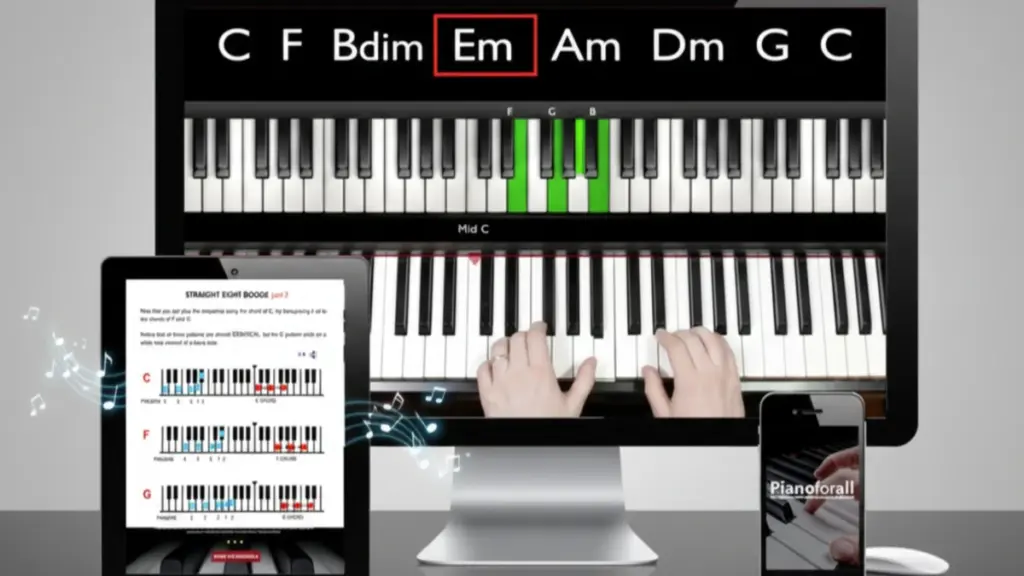
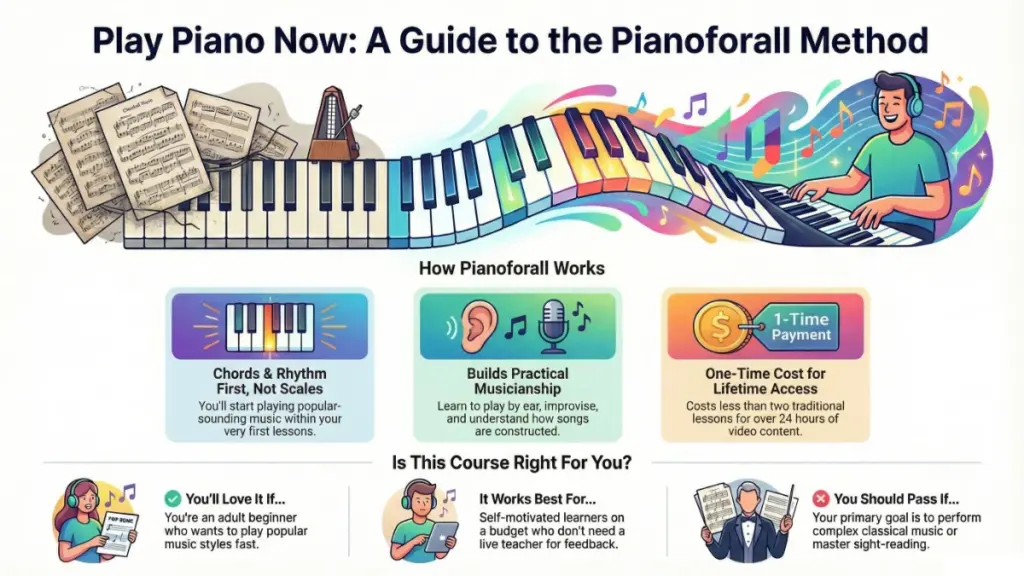
Instead of beginning with note-reading and classical theory, Pianoforall starts with chords and rhythm patterns. You’ll be playing familiar-sounding music within your first few sessions, which creates immediate satisfaction and keeps you motivated. Think of it like learning to cook by making actual meals instead of studying nutrition charts for a month.
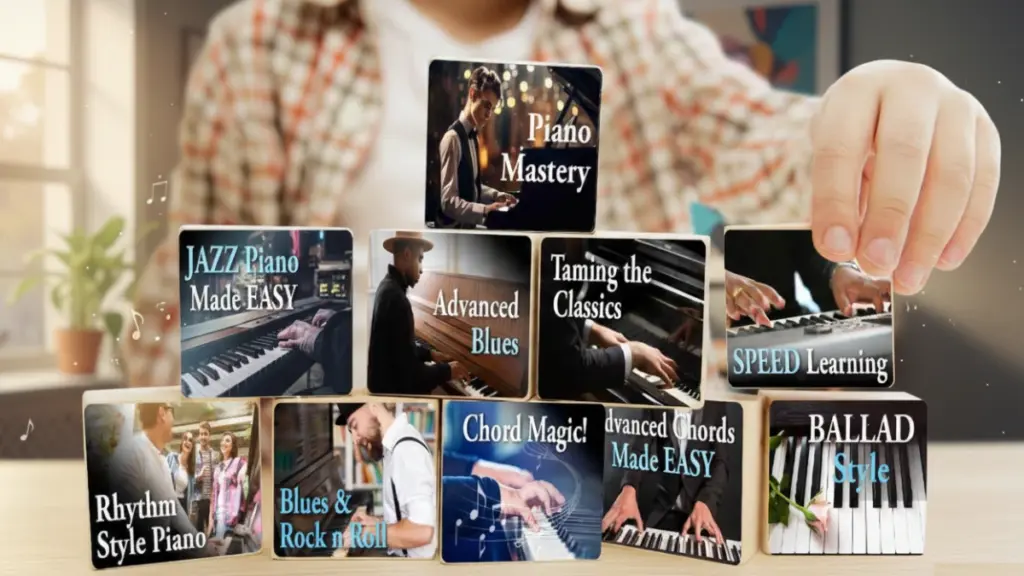
The course consists of 10 interactive eBooks packed with embedded video lessons (24.5 hours total) and over 1,000 audio examples. Created by Robin Hall, a British piano instructor with decades of teaching experience, the program covers everything from pop and blues to jazz and even some classical pieces.
What I’ve found interesting in my research is how Pianoforall prioritizes practical musicality over academic theory. You learn to play by ear, improvise, and understand how songs are actually constructed—skills that take years to develop in traditional lessons but feel natural when you start with chords first.
The format is entirely self-paced and digital, which means you can learn on any device (Mac, PC, iOS, Android) without scheduling around a teacher’s availability. For a one-time payment of $49, you get lifetime access to all materials—no subscriptions, no recurring fees.
Breaking Down the Pianoforall Curriculum: What You Actually Learn
Let me walk you through what’s inside, because the structure matters when you’re evaluating whether this course fits your goals.
Books 1-3: Building Your Foundation
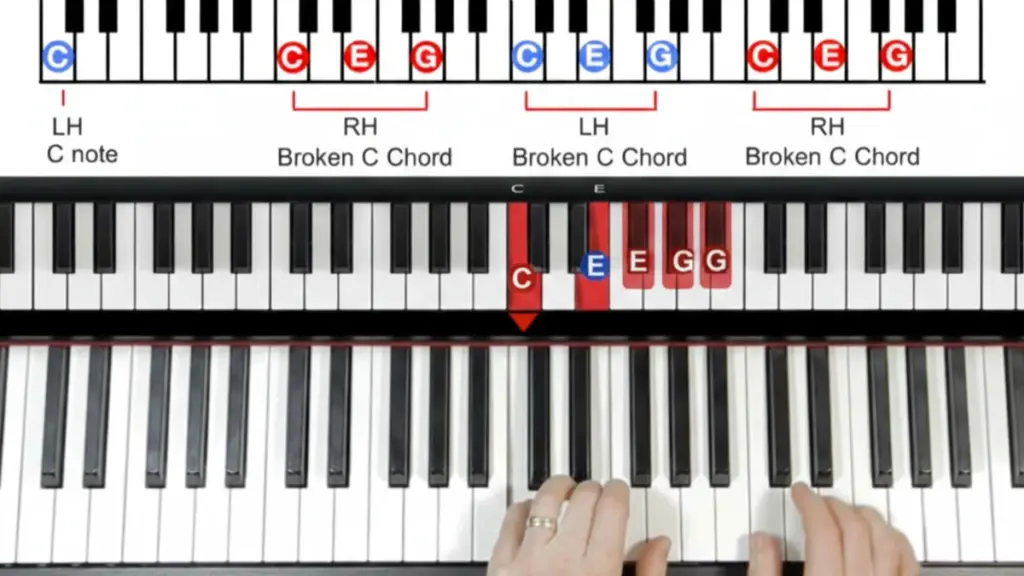
Book One (Party Time – Rhythm Style Piano) throws you straight into playing pop-style chord progressions with your left hand while adding melodies with your right. This is where complete beginners get their first taste of making real music. The focus on rhythm patterns—not just hitting notes—teaches you to feel the music instead of mechanically pressing keys.
Book Two (Blues & Rock N’ Roll) introduces the 12-bar blues structure and rock rhythms. What I appreciate here is how the course teaches left-hand patterns that become the backbone of virtually every popular music style. These patterns are the secret sauce that makes beginner playing sound fuller and more professional.
Book Three (Incredible Inversions) is where things get more sophisticated. Chord inversions let you move smoothly between chords without jumping all over the keyboard. The course also introduces the cycle of fifths here—a concept that sounds intimidating but becomes incredibly useful once you understand it. This is the kind of knowledge that makes transposing songs to different keys feel like second nature.
Books 4-5: Expanding Your Chord Vocabulary
Book Four (Chord Magic) and Book Five (Advanced Chords) dive deep into chord theory, covering everything from basic major and minor chords to extended chords like 9ths, 11ths, and suspended chords. If you’ve ever wondered how jazz pianists create those rich, complex sounds, this is where you start learning the building blocks.
The practical approach here is smart: instead of memorizing theory in isolation, you learn chords in the context of actual songs and styles. The Beatles styling section in Book Five is particularly clever, showing you how to apply advanced chords to familiar melodies.
Books 6-9: Style-Specific Deep Dives
This is where Pianoforall branches into specific genres:
- Book Six (Ballad Style) teaches you to create emotional, expressive playing—perfect for those moments when you want to play something beautiful at a gathering
- Book Seven (Jazz Style) focuses on improvisation and jazz chord progressions, opening up a whole new world of musical expression
- Book Eight (Advanced Blues) builds on the earlier blues material with more complex progressions and soloing techniques
- Book Nine (Classical Piano) introduces basic sheet music reading and simplified classical pieces—though this is admittedly the course’s weaker section
Book 10: Speed Learning (Technical Development)
Despite the name, this final book focuses on scales, arpeggios, and finger exercises presented in a way that doesn’t feel like homework. The inclusion of blues and jazz workouts keeps things engaging while building the technical skills you’ll eventually need.
The Real Pros: Where Pianoforall Genuinely Excels
After analyzing hundreds of user experiences and comparing this approach to traditional methods, here’s where Pianoforall truly delivers value:
You’ll Play Real Music Fast – This isn’t theoretical. Within the first few hours, you’re playing chord progressions that sound like actual songs. For adult learners who’ve dreamed of playing piano but felt intimidated by traditional methods, this instant gratification is crucial for staying motivated.
Builds Practical Musicianship – The emphasis on playing by ear, improvising, and understanding chord progressions creates skills you’ll actually use. If you want to jam with friends, accompany singers, or just sit down and play without sheet music, these abilities matter more than perfect sight-reading.
Incredibly Cost-Effective – At $49 for lifetime access, you’re paying less than the cost of two traditional piano lessons. Even if you only complete half the course, the value-to-cost ratio is exceptional. No subscriptions, no upsells, no hidden fees.
Learn at Your Own Pace – Whether you have 15 minutes a day or three hours on weekends, the self-paced format adapts to your schedule. You can revisit difficult concepts as many times as needed without feeling rushed or embarrassed.
Covers Multiple Styles – Most beginner courses stick to one genre. Pianoforall exposes you to pop, rock, blues, jazz, and classical, letting you discover what resonates with you personally. This variety keeps things fresh and prevents burnout.
Robin Hall’s Teaching Style Works – Hall’s enthusiasm is genuine, and his explanations are clear without being condescending. The split-screen videos showing both his hands and the keyboard make it easy to follow along. You can tell he’s taught thousands of students and knows exactly where beginners struggle.
The Honest Cons: Where Pianoforall Falls Short
No course is perfect, and it’s important to understand Pianoforall’s limitations before committing:
Music Theory Understanding Has Gaps – While you’ll learn how to play many chords and progressions, you won’t always understand why they work. This can make it harder to analyze unfamiliar music or create complex compositions later. The course teaches patterns effectively, but the underlying theoretical framework isn’t as deep as traditional methods provide.
Sheet Reading Development Is Limited – If your goal is to play complex classical pieces or read orchestral arrangements, Pianoforall’s approach will eventually hit a wall. Sheet music is introduced later in the course and isn’t emphasized enough for those who want strong sight-reading skills.
Classical Content Is Weak – Book Nine attempts to cover classical piano, but it’s clearly not the course’s strength. If classical music is your primary interest, you’ll need to supplement with additional resources or consider Pianoforall’s separate “Classics by Ear” course.
Requires Self-Discipline – Without a teacher holding you accountable, it’s easy to skip lessons or develop bad habits. Some learners need the structure and feedback that only live instruction provides.
Song Selection Can Feel Dated – While the teaching concepts are timeless, some of the specific song examples lean toward older pop standards. Younger learners might not connect with all the musical references.
Who Should (and Shouldn’t) Choose Pianoforall
After evaluating this course from multiple angles, here’s my honest assessment of who will benefit most:
Pianoforall Is Perfect For:
- Adult beginners who’ve always wanted to play piano but felt intimidated by traditional lessons
- People who want to play popular music, not just classical pieces
- Visual and pattern-based learners who prefer seeing shapes and movements over reading notation
- Budget-conscious students looking for maximum value without monthly subscriptions
- Anyone who quit traditional lessons because they felt slow or boring
- Musicians from other instruments (especially guitarists) who understand chords and want to apply that knowledge to piano
Pianoforall Probably Isn’t Right For:
- Young children who need more structured, supervised learning
- Classical piano aspirants who dream of performing Chopin or Rachmaninoff
- People who specifically want to master sight-reading as their primary skill
- Learners who need external accountability and regular feedback from a live instructor
- Those expecting to become concert-level pianists from a single $49 course
How Pianoforall Compares to Other Online Piano Courses
To give you context, here’s how Pianoforall stacks up against other popular options:
Flowkey offers a larger song library and a sleeker interface but lacks Pianoforall’s depth in improvisation and chord theory. It’s better for learning specific songs, while Pianoforall is better for understanding how music works.
Playground Sessions gamifies learning with challenges and rewards, making it great for kids and competitive adults. However, its approach is more rigid and less focused on creative musicianship than Pianoforall.
Skoove provides structured, step-by-step lessons with real-time feedback, which some learners prefer. But its song selection is more limited, and it requires a monthly subscription ($19.99+) rather than a one-time payment.
Traditional private lessons offer personalized instruction and immediate feedback but cost $30-$100+ per hour and require scheduling. For building fundamental technique and receiving correction on hand position, nothing beats a good teacher. But for learning practical chord-based playing on a budget, Pianoforall delivers more value.
In my experience reviewing educational software, the best approach often combines resources. You might use Pianoforall for chord fluency and improvisation while supplementing with a music theory app or occasional lessons with a local teacher for technique refinement.
The Bottom Line: Is Pianoforall Worth Your $49?
Here’s what it comes down to: Pianoforall delivers on its core promise. If you want to learn chord-based piano playing, develop improvisational skills, and play popular music relatively quickly, this course absolutely works. The method is proven by over 500,000 students, and the lifetime access for $49 is exceptional value.
What you need to accept is that this isn’t a replacement for comprehensive classical training or a shortcut to concert-level playing. It’s a practical, enjoyable way to become a functional pianist who can sit down and make music without sheet music.
Think of Pianoforall as the difference between learning enough Spanish to travel confidently through Mexico versus studying to become a literary translator. Both are valuable, but they serve different purposes.
For most adult learners who simply want to enjoy playing piano—whether that’s entertaining friends, accompanying themselves while singing, or just having a creative outlet after work—Pianoforall provides exactly what’s needed without the frustration of traditional methods.
The course won’t make you a virtuoso, but it will make you a musician. And honestly, for 49 bucks, that’s a pretty remarkable deal.
Frequently Asked Questions About Pianoforall
Can absolute beginners really learn from Pianoforall without any prior experience?
Yes, the course is specifically designed for complete beginners. The first few lessons assume zero knowledge and build gradually. However, having some understanding of basic music concepts (like what a chord is) can help you progress faster.
How long does it take to complete the entire Pianoforall course?
Most students take 6-12 months working through all ten books at a comfortable pace. But here’s the key: you’ll start playing recognizable music within the first week. The timeline depends entirely on how much time you can dedicate and how thoroughly you want to master each section.
Do I need a piano or will a keyboard work?
A 61-key keyboard with touch-sensitive keys will work fine for learning. You don’t need a full 88-key piano initially, though you’ll eventually want one if you continue progressing. Any keyboard with weighted or semi-weighted keys is better than one with cheap, plastic-feeling keys.
Can I get a refund if Pianoforall doesn’t work for me?
Yes, Pianoforall offers a 60-day money-back guarantee. If you’re not satisfied, you can request a full refund within two months of purchase, no questions asked.
Will Pianoforall teach me to read sheet music?
Sheet music reading is introduced in later books, but it’s not the primary focus. If strong sight-reading is your main goal, you’ll need additional resources. However, you’ll develop other valuable skills (chord recognition, playing by ear) that many sight-readers lack.
Ready to start your piano journey the unconventional way? Pianoforall might just be the motivation you’ve been missing. At the very least, that 60-day guarantee means you can try it risk-free and see if the chord-first approach clicks for you.